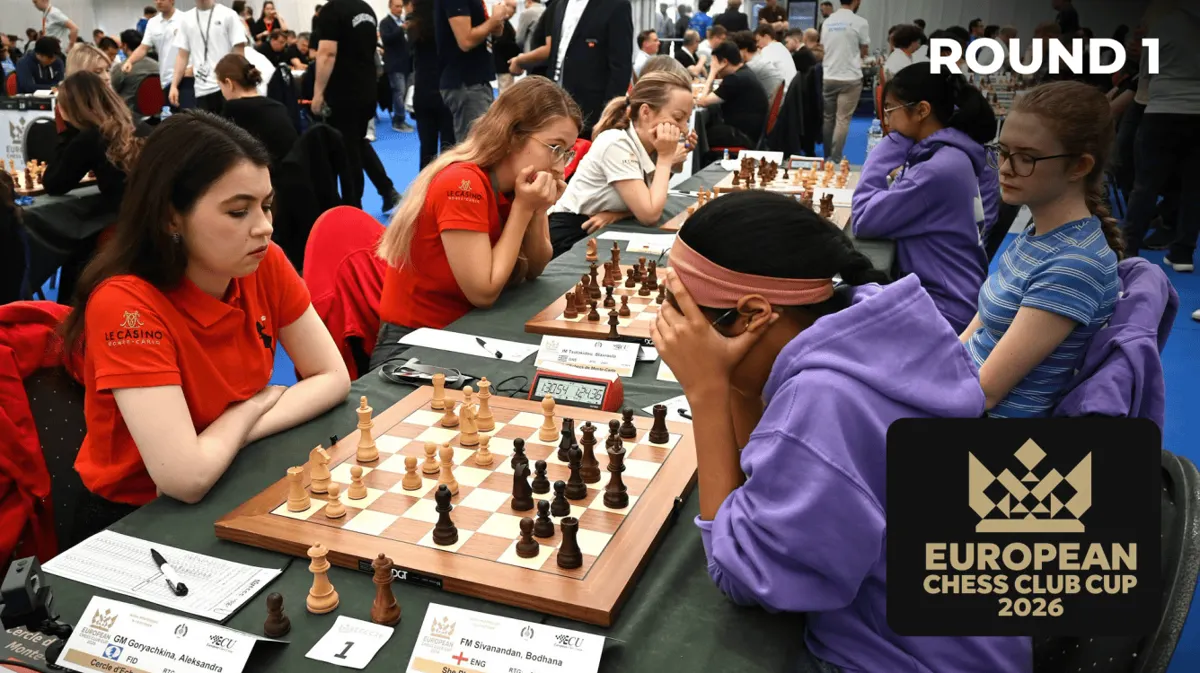
The European Club Cup and its women's counterpart began in Montenegro with the expected hierarchy largely intact. Leading teams in the Open section produced shutout victories by rotating their lineups, leaving many star players on the sidelines. The Swiss format meant favorites faced manageable opposition in round one, and most capitalized on the opportunity to accumulate points. One notable exception came when Swedish number-one Nils Grandelius fell to a lower-rated opponent, a loss that marked a significant stumble for a top seed.
The women's championship told a different story despite similar seeding advantages. Defending champion Cercle d'Echecs de Monte-Carlo faced an unexpectedly stubborn challenge from the young English team She Plays To Win Lionesses A. The match stretched over five hours as the visitors mounted resistance at multiple boards. A teenage player drew against a chess legend, while an eleven-year-old battled a former Women's World Championship candidate in a marathon contest that tested both technique and stamina.
The tournament brought together an unusually large field, with more than a hundred teams competing across both sections. Players ranged from world-class grandmasters to club-level participants, creating matchups that produced surprising results alongside the expected dominant performances. The short seven-round format compressed the competition into a single week, running through October 23, with each round promising fresh complications as opponents grew stronger.
The stakes extend beyond Budva itself. Five teams will qualify for a new elite event called the European Chess Super League, scheduled for Bucharest in February 2027, with a prize fund of 300,000 euros. This qualifying pathway has raised the competitive intensity and given all participating teams incentive to push hard from the opening round onward.